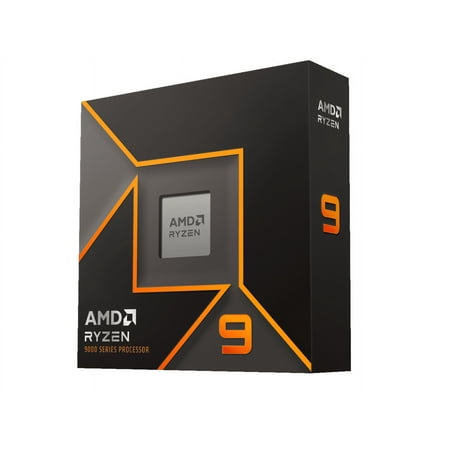
The AMD Ryzen 9 9900X is a compelling choice for professionals who need a balance of speed, efficiency, and multitasking power. Built on the Zen 5 architecture, it delivers noticeable improvements in single-threaded performance—ideal for responsive UI tasks in tools like Ghidra, IDA Pro, and Wireshark. With 12 cores and 24 threads, it handles multiple virtual machines smoothly, making it well-suited for penetration testing labs, sandboxing environments, and automated threat detection pipelines. The chip's base and boost clocks (~4.4 GHz / ~5.6 GHz) ensure snappy execution of Python, PowerShell, and Bash scripts, which are staples in cybersecurity automation.
One of the standout features for lab environments is its thermal efficiency. With a reduced TDP of 120W, the 9900X runs cooler than its predecessor and most Intel counterparts, which is a plus for compact or always-on setups. It also supports DDR5-5600 memory, improving bandwidth for log parsing and packet inspection tasks. While it doesn't match the brute force of AMD's 16-core 9950X or Intel's Core i9 in heavy parallel workloads, it offers a more balanced and power-conscious alternative for professionals who value uptime and responsiveness over raw throughput.
From a cybersecurity perspective, the 9900X excels in real-world usability. It boots VMs quickly, handles large log datasets with minimal lag, and maintains stability under sustained workloads. The AM5 platform also ensures upgrade flexibility for future-proofing your secure workstation. If your daily routine involves threat modeling, forensic analysis, and scripting across multiple environments, this CPU delivers reliable performance without excessive heat or power draw. It's not the most cost-effective option for pure multi-core tasks, but for a security-focused lab build, it strikes a smart balance between capability and efficiency.